Friday, May 24, 2019

May 27, 28, 29

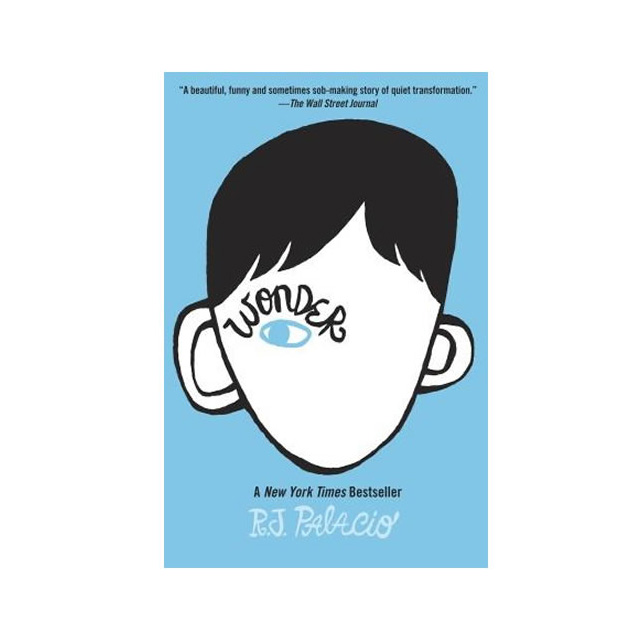
Image result for wonder novel
https://rj-palacios-wonder.fandom.com/wiki/Wonder?file=Wonder-book.jpg
May 27
Introduction to Wonder

1.  Who is R.J. Palacio?

2.  Wonder Introduction
https://www.shmoop.com/wonder/

3.  Research Treacher Collins syndrome
Start with this link:
https://ghr.nlm.nih.gov/condition/treacher-collins-syndrome

May 28

class reading
May 29 - no lesson    Fieldtrip

Tuesday, May 21, 2019

May 20, 21, 22

Image result for online quiz
https://creativebeacon.com/design-a-quiz-for-your-website-to-build-traffic/


May 20
Is tradition worth preserving?

May 21
Criterion A, C, D Assessment
http://www.quia.com/quiz/7278141.html

May 22
Finish unit

Monday, May 13, 2019

May 13, 14, 15

Image result for passive voice
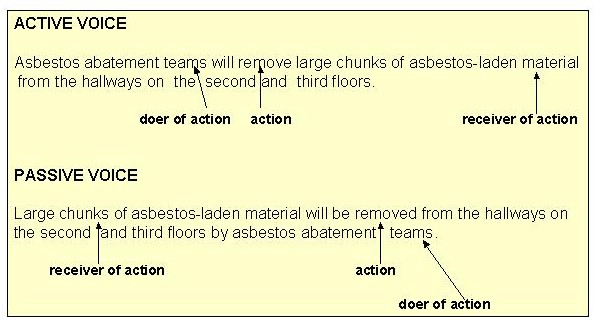
https://webapps.towson.edu/ows/activepass.htm

May 13, 14
Reading/Writing Assessment
Criterion B, Criterion D

May 15
1. Past Simple/Present Perfect quiz - http://www.quia.com/quiz/7238599.html

2. Links to: Individuals and society - History: Lotus feet pp 106-107
Read and discuss
To learn more:    www.theguardian.com/world/2005/mar/21/china.gender

Monday, May 6, 2019

May 6, 7, 8

Image result for bullfighting
https://www.kialo.com/should-bullfighting-be-banned-1323

May 6
1.  Read Theory
2.  Past Simple/Present Perfect Exercises
https://www.thoughtco.com/past-simple-or-present-perfect-english-quiz-4062086
http://www.esl-lounge.com/student/grammar/2g11-past-simple-present-perfect-gap-fill.php
https://elt.oup.com/student/solutions/preint/grammar/grammar_05_022e?cc=pt&selLanguage=pt
https://www.grammarbank.com/simple-past-present-perfect-tenses.html
https://www.grammarbank.com/past-simple-or-present-perfect-exercise.html
https://www.grammarbank.com/simple-past-vs-present-perfect-exercise.html
https://web2.uvcs.uvic.ca/courses/elc/studyzone/410/grammar/ppvpast1.htm
https://first-english.org/english_learning/english_tenses/comparison_tenses/20_simple_past_or_present_perfect.htm
https://www.examenglish.com/grammar/b1_presentperfect_pastsimple.htm
https://www.englishpage.com/verbpage/verbs6.htm

May 7
Although the origins of bullfighting can be traced back to ancient Mesopotamia (a large area now know to us as Iraq, Syria and part of Turkey) and the Mediterranean, since medieval times the practice has become synonymous with Spain and the Spanish culture.

You can find out more about bullfighting by visiting the following website for the League Against Cruel Sports, a charity dedicated to putting an end to cruel practices often carried out in the name of tradition: http://www.league.org.uk/bullfighting-and-bull-running

Supporters of bullfighting say it is an integral part of the national culture.  But is it right to sacrifice animals for the sake of tradition?

Conduct research to develop your own opinion.

May 8
Reading Assessment - Criterion B, D

Wednesday, April 24, 2019

April 29, 30, May 1 (National holiday)

Image result for past simple or present perfect
https://pt.slideshare.net/egonzalezlara/past-simplepresentperfect-30123405
April 29, 30
Answer the questions from The Lottery

To listen to the story click here: https://www.youtube.com/watch?v=Kf90v9GOaAk

1. Construct meaning by making inferences about the following. Justify your answers by making reference to the text. (strand i)
a.  When the story was written or set
b. Where the story was set

2.  Identify and list some of the rules of the lottery which are outlines in the story. (strand i)
3. Analyse the description of the black box in paragraph 5 on page 100. What does it reveal about the tradition of the lottery? (strand ii)
4. Evaluate some of the attitudes expressed about the tradition by the characters in the story. How do the old feel about it? Do the young think differently? (strand i)
5. Evaluate why the townspeople did what they did in the story. (strand ii)
6. Interpret the message of the story. (strand ii)
7. What do you understand about the writer's attitude towards traditional practices? (strand ii)

HOMEWORK:  5 Read Theory

May 1 - National holiday - no school

May 6
2. Although the origins of bullfighting can be traced back to ancient Mesopotamia (a large area now know to us as Iraq, Syria and part of Turkey) and the Mediterranean, since medieval times the practice has become synonymous with Spain and the Spanish culture.

You can find out more about bullfighting by visiting the following website for the League Against Cruel Sports, a charity dedicated to putting an end to cruel practices often carried out in the name of tradition: http://www.league.org.uk/bullfighting-and-bull-running

Supporters of bullfighting say it is an integral part of the national culture.  But is it right to sacrifice animals for the sake of tradition?

Conduct research to develop your own opinion.

Sunday, April 7, 2019

April 8, 9, 10

Image result for present simple or present perfect

April 8
1. 5 minute warm-up:  In your notebook address the following prompt: If I were 10 years older, I could . . .
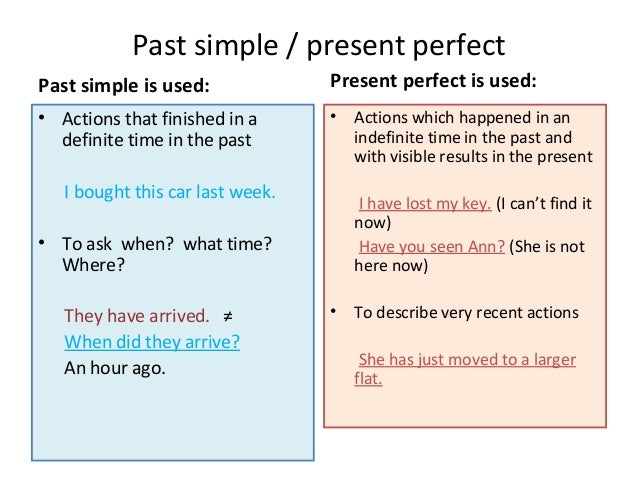
2.  Past Simple OR Present Perfect?????


Past Simple or Present Perfect explanation: https://www.englisch-hilfen.de/en/grammar/present_perfect_simple_past_contrasted.htm

Past Simple or Present Perfect exercises:
https://web2.uvcs.uvic.ca/courses/elc/studyzone/330/grammar/upperf2.htm
https://www.englisch-hilfen.de/en/exercises/tenses/simple_past_present_perfect2.htm
https://www.englisch-hilfen.de/en/exercises/tenses/simple_past_present_perfect3.htm
https://www.perfect-english-grammar.com/past-simple-present-perfect-4.html
https://www.englisch-hilfen.de/en/exercises/tenses/simple_past_present_perfect.htm

April 9, 10
1.  5 minute warm-up:  In your notebook address the following prompt:
      If there were no rules, what do you think would happen?
2.  2.  Can traditions be harmful? p. 98
     Why do we follow tradition?
3.  Activity: The Lottery pp. 99-105
ATL: Communication skills: Read cirtically and for comprehenson
The Lottery is a short story by American writer Shirley Jackson. When it was first published it caused a great deal of controversy.
4. Read and answer the questions


Friday, March 29, 2019

April 1, 2, 3

Difference Between Culture and Tradition - info


April 1 
1.  5 minute warm-up:  In your notebook write the words you need to hear today . . .
2.  Present Perfect
Present Perfect Explanation:   https://www.ef.com/wwen/english-resources/english-grammar/present-perfect/
Present Perfect Exercises:

Here's a list of all the present perfect simple exercises and present perfect continuous exercises on my website.
(If you need to review how to make the present perfect, click here)
(If you need to review how to use the present perfect, click here)
Practice exercises about how to make the present perfect:

April 2 
 1.  5 minute warm-up - You get to guest star on a TV show. What show is it? What happens in this particular episode?

2.  p. 91 What is tradition? 
3.  Activity:  What are your traditions? p.91
     Use an online dictionary to find the defintions of the following words: tradition, ritual, custom, rite, ceremony.   
     Then answer questions 1- 4 in your notebook.  
     Discuss your answers in pairs and then feed back to the class.

 
April 3 
1.  Present Perfect Quiz -   http://www.quia.com/quiz/6054743.html
2.  Activity: Tradition or superstition? p.94
     Follow the instructions and work collaboratively to answer question #1-4
   

March 26, 27

Image result for new unit
https://www.girlguidingnwe.org.uk/leaders-area/grants-and-funding/starting-a-new-unit-grant/

March 26 
New Unit:  Is tradition worth preserving?  pp 90-123

Statement of Inquiry: Traditions are an important part of any culture, but some can be harmful to certain groups of people. To promote fairness and development across the globe, we must allow those without a voice to present an argument and spread their own message about the place of such traditions in the modern word.

Gobal context:  Fairness and development
Key concept:  Culture
Related Concepts:  VoiceArgumentMessage

Unit questions:
Factual: What is tradition?
Conceptual: How are traditions created?
Debatable: How can we protectothers from dangerous traditions?

IB Learner Profile:
Principled

Key Words:  ceremony    rite    tradition    custom     ritual


March 27 
Read Theory in class 5

March 18, 19, 20, 25

March 18, 19, 20, 25  Image result for oral presentations cartoon

Oral Presentations - Command Terms

Wednesday, February 27, 2019

March 11, 12, 13

Image result for students teaching students
https://needsfocusedteaching.com/quick-fun-way-to-encourage-learning/
March 4, 5, 6 - Half term break

March 11, 12, 13
 Criterion C, D - Oral Presentation
  Year 9 students - You be the teacher!   Encourage learning!  This is your chance to use your creativity to teach your classmates and your teacher. 

Think about tools that you can use to help (handouts, websites, online exercises, quizlet, padlet, blogs, review game, video, etc.) you create a memorable lesson.

Task: Peer teaching: Demonstrate, Explain, Teach   
Your task is to develop an engaging lesson to teach your command term to your classmates.

Presentation date:  March 18

Student assigned command term
Analyze - Camille
Construct meaning - Caetano
Evaluate - Madelena
Discuss - João
Identify - Caio
Infer - Nerea
Synthesize - Zengyi
Understand - Nuno


MYP  Language Acquisition Command terms


The table below illustrates some of the most commonly used command terms in MYP language acquisition. 
Term 
Definition 
Analyse 
Break down in order to bring out the essential elements or structure. To identify parts and relationships, and interpret information to reach conclusions. 
Construct meaning 
Create an understanding about something; infer and interpret facts, an opinion, an idea or an event that has been read, viewed, listened to. 
Evaluate 
Assess the implications and limitations; make judgments about the ideas, works, solutions or methods in relation to selected criteria. 
Identify 
Provide an answer from a number of possibilities; recognize and state briefly a distinguishing fact or feature. 
Interpret 
Use knowledge and understanding to recognize trends and draw conclusions from given information. 
Recognize 
Identify through patterns or features. 
Synthesize 
Combine different ideas in order to create new understanding. 
Understand 
Comprehend the meaning or significance of something and explain it in a different way. 

Infer                     Deduce or conclude (something) from evidence and reasoning rather than from explicit statements.

Discuss                 Talk or write about (a topic) in detail, taking into account different issues or ideas.

Friday, February 22, 2019

February 25, 26, 27

February 25
Read Theory - http://readtheory.org
Today we will become acquainted with Read Theory and create a base line.

February 26
1.  Warm-up SAT Vocabulary #1 quiz (2nd attempt)  (alleviate, insolent, narcissistic, pacify, terse, thrifty, verbose)
      http://www.quia.com/quiz/7124429.html

2.  ACTIVITY:  Write your story, change history.
ATL - Communication skills: Write for different purposes
          Transfer skills: Inquire in different contexts to gain a different perspective

Watch this inspirational TEDYouth 2011 Talk by Brad Meltzer in which he encourages us to dream big, work hard and stay humble, and then answer the questions below:  

1.  What three things does Meltzer tell his children?   (strand i)
2.  How old was Steve Jobs when he co-founded Apple?   (strand i)
3.  Identify the other famous people mentioned in the talk and write down what they did and how old they were when they did these things.   (strand i)
4.  How many rejection letters did Meltzer receive when he wrote his first book?    (strand i)
5.  Evaluate Meltzer's description of "History". Do you agree with his point of view? Why?  Why not?  (strand iii)

February 27
Writing Assessment

Criterion C -  Communicating in response to spoken, written and visual text
Criterion D -  Using Language in spoken and written form

March 4, 5, 6 - Half term break

March 11, 12, 13
 Criterion C, D - Oral Presentation
     Task:  You will select a command term and create a lesson to teach your command term to your classmates.  Presentation date:  March 18

MYP  Language Acquisition Command terms

The table below illustrates some of the most commonly used command terms in MYP language acquisition. 
Term 
Definition 
Analyse 
Break down in order to bring out the essential elements or structure. To identify parts and relationships, and interpret information to reach conclusions. 
Construct meaning 
Create an understanding about something; infer and interpret facts, an opinion, an idea or an event that has been read, viewed, listened to. 
Evaluate 
Assess the implications and limitations; make judgments about the ideas, works, solutions or methods in relation to selected criteria. 
Identify 
Provide an answer from a number of possibilities; recognize and state briefly a distinguishing fact or feature. 
Interpret 
Use knowledge and understanding to recognize trends and draw conclusions from given information. 
Recognize 
Identify through patterns or features. 
Synthesize 
Combine different ideas in order to create new understanding. 
Understand 
Comprehend the meaning or significance of something and explain it in a different way. 

Infer                     Deduce or conclude (something) from evidence and reasoning rather than from explicit statements.

Discuss                 Talk or write about (a topic) in detail, taking into account different issues or ideas.

Sunday, February 17, 2019

February 18, 19, 20

February 18
1.  Warm-up SAT Vocabulary #1 quiz
      http://www.quia.com/quiz/7124429.html

2.  Watch the video:  Everyday leadership

     https://www.ted.com/talks/drew_dudley_everyday_leadership

February 19 
 Analysing texts: https://www.englishworksheetsland.com/readinganalysis.html

HOMEWORK: Read the text and answer the 3 questions
 https://www.englishworksheetsland.com/grade8/readinginfo/5/4puppy.pdf


Command terms:
1. Analyse - Break down in order to bring out the essential elements or structure. To identify parts and relationships, and interpret information to reach conclusions.

Evaluate - Assess the implications and limitations; make judgments about the ideas, works, solutions or methods in relation to selected criteria.

Synthesize - Combine different ideas in order to create new understanding.


2.  Review answers on A lollipop moment p. 43 
     https://www.ted.com/talks/drew_dudley_everyday_leadership

February 19, 20
pp. 44-45
Activity: Why is it important for us to develop leadership skills?

p. 45 Interviewing skills

Monday, February 11, 2019

February 11, 12, 13

February 11
Last Week Review

HOMEWORK:  
Word puzzle:   Use and rearrange the letters in the words in capital letters below to create new words (minimum 20 each). You can use some or all of the letters in the word to make your new words. How many different words can you come up with?  Write the answers in your notebook.

LEADERSHIP
EARTHQUAKE

February 12
1.  5 minute warm-up: Modal Verbs Obligation (Must, have to)  https://www.quia.com/quiz/6143618.html
2.  Submit poems - Criterion C - January 28, 29 work
3.  This is the end of the unit - send an email to your parent (cc me on this email) explaining:
      The name of this unit,
      The purpose of this unit,
      What this unit was about,
      What you learned during this unit,
       and answer these unit questions to help contextualize your learning.
      Factual Questions: What is slang?  What is register?
      Conceptual:  How do we change the way we speak in different contexts?
      Debatable:  What place does street language have in society?


February 13
1.  Quizizz.com       Try logging into the site and using the following code to start a vocab quiz:  rddietrich_06866

2.  Review answers on A lollipop moment p. 43 
     https://www.ted.com/talks/drew_dudley_everyday_leadership

Command terms:
Analyse - Break down in order to bring out the essential elements or structure. To identify parts and relationships, and interpret information to reach conclusions.

Evaluate - Assess the implications and limitations; make judgments about the ideas, works, solutions or methods in relation to selected criteria.

Synthesize - Combine different ideas in order to create new understanding.

HOMEWORK: Key words - vocabulary 
adventure,   interview,   extreme,    leaders,   fatal,   obstacles,   gear,    rescue,   hazard,     risk,    injuries,    thrill
   

Friday, February 1, 2019

February 4, 5, 6

February 4
Criterion B - Reading Assessment

February 5
1.  Word puzzle p. 42
     LEADERSHIP    Use and rearrange th letters in the word "leadership" to create new words (minimum 20). You can use some or all of the letters in the word to make your new words. How many different words can you come up with? 

 2.  What is leadership?  How do you develop leadership skills?  p. 42
      Read page 42. Open your notebook and take notes on what you have read.

3. ACTIVITY: A lollipop moment  p. 43
    Watch the video and complete the task. Write answers in your notebook. Write in complete sentences.
   
February 6
1.  5 minute Paragraph Writing Warm-up
Prompt: What's the worst thing about the internet?
Write your answers here:  https://padlet.com/rddietrich1/luyhg05f0wc6

2.  Complete ACTIVITY: A lollipop moment

3.  Modal Verbs  https://www.perfect-english-grammar.com/modal-verbs.html
Modal Verbs of Ability explanation: https://www.perfect-english-grammar.com/modal-verbs-of-ability.html
Modal Verbs of Ability exercises: https://www.perfect-english-grammar.com/modal-verbs-of-ability-exercise-1.html

Modal Verbs of Obligation explanation: https://www.perfect-english-grammar.com/modal-verbs-of-obligation.html
Modal Verbs of Obligation exercises: https://www.perfect-english-grammar.com/modal-verbs-of-obligation-exercise-1.html

Sunday, January 27, 2019

January 28, 29, 30

January 28, 29, 30
What is free verse poetry?
free verse poem template
http://lugezi.com/images/
These poems may use internal rhymerepetitionalliterationonomatopoeia.

Criterion C - Communicating in response to spoken, written or visual text
1.  Write a free verse poem: minimum 50 lines


Monday, January 21, 2019

January 21, 22, 23


2.  Could you be a poet?  http://www.bbc.co.uk/guides/zxcbb9q

3. Activity:  Translate by Benjamin Zephaniah
ATL: Creative-thinking skills: Create original workds and ideas; Use existing works and ideas in new ways.

Benjamin Zephaniah was born in Birmingham in the UK, and grew up in Jamaica and the UK.  He became famous in the 1980s with his powerful political poetry. He was one of the poets tht made dub poetry famous. Dub poetry is a form of performance poetry that evolved from reggae music and is sometimes performed over music.

4. Research:  What is spoken poetry? What is dub poetry?  What is dis poetry?


Complete:
5.  Task 1   pp.34-35

6.  Task 2   p. 34  To be done individually
  Criterion C - Write a poem or spoken-word piece inspired by and performed over a piece of music


Monday, January 14, 2019

January 14, 15, 16

January 14

in, at, on - time
https://www.perfect-english-grammar.com/time-prepositions-exercise-2.html
https://www.englisch-hilfen.de/en/exercises/structures/prepositions_at_in_on_time.htm
https://www.ecenglish.com/learnenglish/lessons/prepositions-time-quiz/
https://www.tolearnenglish.com/exercises/exercise-english-2/exercise-english-16425.php
https://agendaweb.org/grammar/prepositions-of-time-exercises.html

January 15 
1.  Criterion A - Assessment

2.  in, at, on - place    online exercises
https://www.perfect-english-grammar.com/prepositions-of-place-exercise-1.html
https://www.ecenglish.com/learnenglish/lessons/in-on-at-prepositions-place
https://agendaweb.org/grammar/prepositions-exercises.html
https://www.englishgrammar.org/prepositions-place-exercise/
https://www.really-learn-english.com/at-in-on-prepositions-of-place.html

January 16

1.  Language register is the level of formality with which you speak. Explain this in your own words to a Year 7 student. Support your answer by including examples. Write your response in your notebook.

2.  Links to: Individuals and societies - History    p. 32
Song lyrics often contain slang words and expressions. By listening to songs from different time periods, we can get an insight into the slang words that were popular at that time. They also provide an insight into culture trends, fashion and society.

Task 1 - complete Task 1

In pairs, translate the following phrases from the song into Standard English expressions. Which ones are still in use today? . . .     p. 32
http://teachrock.org/video/the-beach-boys-fun-fun-fun-1964/

Task 2 - complete Task 2
Match the song slang with the correct meaning.   p. 32

Monday, January 7, 2019

January 7, 8, 9


January 7
1.  Task 3, p. 29
In pairs, have a go a making your own Shakespearean insults. Visit this website and coose a word from each colum:  www.pangloss.com/seidel/shake_rule.html.

To get a feel for Shakespearean insults: https://www.nosweatshakespeare.com/resources/shakespeare-insults/

For fun check out this site: http://insult.dream40.org/

2.  Quia Quiz - Irregular Verbs - Infinitive - Past Simple - Past Participle #1

http://www.quia.com/quiz/6369090.html 

January 8
The World's English mania
  1. Identify what Jay Walker says is the world's newest mania   (strand i)
  2. Explain in your own words the meaning of the word "mania"  (strand ii)
  3. Evaluate what manias can be
  4. Identify how many people are trying to learn English around the world  (strand i)
  5. When do Chinese students start to learn English (strand i)
  6. Why does Jay say that people want to learn English? Do you agree or disagree? Justify your response with information from the text. (strand iii)
  7. In two sentences, identify the type of audio-visual text that is used and its basic purpose.  (strand ii)
  8. After viewing the video, analyse the way students learn English in China. In your opinion, is this a good way to learn a language? Why? Why not?  (strand iii)
  9. What is your experience of learning English?   (strand iii)
  10. What other universal languages are there?   (strand i)
  11. Synthesize the video using your own words.  (strand i)
January 9
Criterion A (Comprehening Spoken and Written Language) Assessment

Tuesday, December 18, 2018

December 17, 18, 19

Image result for it's a wonderful life

December 18, 19

It's A Wonderful Life

7 Enduring Lessons 
  1. Your life has purpose
  2. Keeping up with the Joneses is for saps
  3. Bad guys don't always get punished
  4. Don't hire someone just because they are family
  5. Appreciate how blessed you already are
  6. How to deliver a good toast
  7. Marry the right person     
 https://theweek.com/articles/454845/7-enduring-lessons-from-wonderful-life

PHRASE MATCH
1. It was based a. for five Oscars
2 guardian b. flop
3. all the lives c. inspirational
4. nominated d. production costs
5. the most e. angel
6. initially considered a box office f. for human beings
7. high g. on the short story
8. stiff h. significant
9. affection i. he has touched
10. aesthetically j. competition
 
 http://www.lessonsonmovies.com/its_a_wonderful_life.html

Monday, December 10, 2018

December 10, 11, 12

December 10
Activity:  Everyday English phrases    p. 24
ATL - Information literacy skills:  Use memory techniques to develop long-term memory

When we learn new words with no context it is difficult to keep them n our long term memory, and we somethimes do not understand how to use the work.

Let's discuss:
   How do you feel about learning new words?
  What strategies do you use to help you learn new words?
  If you want to find the meaning of a new word, what do you do?

Task 1 - The best way to learn new words is by using them . . .   p. 24
www.bbc.co.uk/worldservice/learningenglish/language/theenglishwespeak

December 11
1.  5 minute warm-up:   On my winter break I will . . .
2.  Appropriate register, p. 25  http://www.youtube.com/watch?v=sdDBY2-Wmis

3.  ACTIVITY: Recognizing formal and informal language features   p. 27
      ATL - Communication skills: Make inferences a nd draw conclusions

      In pairs, read the follwing sentences, and decide if each one is informal or formal .

December 12
1.  5 minute warm-up:   How difficult is it to use slang in a foreign language?
2.  How does slang both shape and reflect culture?  p. 28

Chaucer - Canterbury Tales
Middle English
https://quod.lib.umich.edu/c/cme/CT/1:1.3?rgn=div2;view=fulltext

Contemporary English  
http://www.lone-star.net/mall/literature/miller.htm

Interlinear
https://sites.fas.harvard.edu/~chaucer/teachslf/milt-par.htm

Friday, November 30, 2018

December 3, 4, 5

December 3, 4

1.  Activity:  Do you like/hate/love?

What is a gerund? https://www.englisch-hilfen.de/en/grammar/gerund.htm

Online exercises for practice:

2.  What is slang? p. 22
How do we change the way we speak in different contexts?

Activity: How do you Brits speak today?
ATL - Communication skills: Read critically and for comprehension

a.  Visit the following website and read the article: http://learnenglishteens.britishcouncil.org/uk-now/read-uk/slang
 b. Check for comprehension:  http://learnenglishteens.britishcouncil.org/uk-now/read-uk/slang
 c. Check your vocabulary (matching): http://learnenglishteens.britishcouncil.org/uk-now/read-uk/slang
d. Check your vocabulary (multiple choice): http://learnenglishteens.britishcouncil.org/uk-now/read-uk/slang
 e. Now answer the questions on p. 22 

December 5
Activity: UK expressions and slang    p. 23
ATL - Communication skills:  REad critically and for comprehension

Task 1 - in pairs, match the expression or slang word with the Standard English definition.

Activity:  Everyday English phrases    p. 24
ATL - Information literacy skills:  Use memory techniques to develop long-term memory

When we learn new words with no context it is difficult to keep them n our long term memory, and we somethimes do not understand how to use the work.

Let's discuss:
   How do you feel about learning new words?
  What strategies do you use to help you learn new words?
  If you want to find the meaning of a new word, what do you do?

Task 1 - The best way to learn new words is by using them . . .   p. 24

Sunday, November 25, 2018

November 26, 27, 28

Image result for girlhood around the world the lily
https://www.thelily.com/whats-a-day-in-the-life-of-a-girl-look-like-in-10-countries-sign-up-for-the-lilys-girlhood-around-the-world-for-a-look/

November 26
1.  Girlhood Around The World https://s2.washingtonpost.com/camp-rw/?e=cmRkaWV0cmljaEB5YWhvby5jb20%3D&s=5bfab901fe1ff63507cadf5c
a.  Read the text and learn about life for a 14 year old girl in the Congo.
b.  How does her life differ from yours?  Write a paragraph, explain, include details.

To learn more about this project and see what life is like in go to this link. It's worth a look: https://www.thelily.com/whats-a-day-in-the-life-of-a-girl-look-like-in-10-countries-sign-up-for-the-lilys-girlhood-around-the-world-for-a-look/

2. So and because - explanation: https://www.espressoenglish.net/so-and-because/
    So and because - online exercise : http://www.esl-lounge.com/student/grammar/2g44-so-because.php

3.  1st conditional - explanation & exercise: https://www.espressoenglish.net/first-conditional/
     1st conditional - online exercise: https://www.perfect-english-grammar.com/first-conditional-exercise-1.html

4.  Irregular Verbs - List of the 50 most common irregular verbs: https://www.perfect-english-grammar.com/support-files/50_common_irregular_verbs_list.pdf
     Irregular Verbs - online exercises There are 4 exercises on this link https://www.perfect-english-grammar.com/irregular-verbs-exercise-1.html


November 27
Kahoot - talk to your cover teacher and organize a student organized Kahoot period 6.

November 28
New Unit

Sunday, November 18, 2018

November 19

November 19
Criterion C, D - Writing      Unit 1 - Am I ready for the real world?
Communicating in Response to Written Text
Using Language in Written form

November 20
English Practice Test - https://intellitest.me/en/knowledge/UH3K0/start?utm_campaign=9910886&utm_medium=mfb_english_test&utm_source=21


What television programmes do you watch to help improve your English?
https://reallifeglobal.com/english-for-life-10-tv-shows-which-youll-love-learning-english-with/

Sunday, November 11, 2018

November 12, 13, 14

Image result for orals
http://www.sbggalanta.sk/category/aktivity/

November 12, 13
Criterion C, D Oral Assessment

November 14

Sunday, November 4, 2018

November 5, 6, 7

Image result for university admissions

November 5
1.  Finish tests
2.  http://first-english.org/english_learning/english_tenses/simple_past/2/10_simple_past_irregular_verbs.htm
http://first-english.org/english_learning/english_tenses/simple_past/2/11_simple_past_irregular_verbs_exercises.htm

3.  Activity: Going to college

Task 1 - Oral Assessment - Criterion C, D  (3-4 minutes)
                                            Presentation Date - Monday, November 12, 13


In pairs or alone conduct research on entering a university to study a subject that you are interested in. Use the questions on p. 15 as a guide to help you. Use a site like Pictochart (https://piktochart.com/) to design a multimedia poster that includes all the information you have found and present it to the class.


November 6
1.  Past Simple
http://first-english.org/english_learning/english_tenses/simple_past/2/12_simple_past_irregular_verbs_exercises.htm
http://first-english.org/english_learning/english_tenses/simple_past/2/13_simple_past_irregular_verbs_examples.htm

November 7
1. Past  Simple
http://www.agendaweb.org/exercises/verbs/simple-past-irregular-1
http://www.agendaweb.org/exercises/verbs/simple-past-irregular-2 
http://www.agendaweb.org/exercises/verbs/irregular-past-3.htm

Sunday, October 21, 2018

October 22, 23, 24

October 22

1.  5 minute warm-up:  In your notebook:
One thing that motivates me:
One thing that frustrates me:
One thing that worries me:

2. Activity: Find inspiration

Ade Adepitan uses a wheelchair as a result of contracting polio as a child, which led to the loss of the use of his left leg.

Ade Adepital is a paralympian. Watch this video and listen carefully to what Ade says about his goals:  www.bbc.co.uk/education/clips/zgn6n39

As you watch, answer the following questions:
1. Where is Ade from?
2. What does Ade do?
3. When did Ade's dream start?
4. Evaluate the purpose of the text.
5. Who is the target audience for this programme? Justify your answers by stating which features or aspects of the programme are particularly suited to this audience.
6. Identify how long it took Ade to reach his dream.
7. Who inspired Ade?
8. Do you like this video? Why? Why not?
9. According to Ade, what is more important than individual success?
10. Basing your answer on the final part of the video (4:09 onwards), what does Ade say anyone can achieve? Explain your answer by referring to information in the video.

October 23
1.  5 minute - Warm-up  -  What do you see?  What do you think?

https://kevinjuntunen.files.wordpress.com/2012/03/lord-lordess.jpg

October 24
Criterion A - Comprehending spoken and visual text

Saturday, October 13, 2018

October 15, 16, 17

Mercedes Print Ad -  Left Brain - Right Brain, Paint
https://www.adsoftheworld.com/media/print/mercedes_left_brain_right_brain_paint
October 15

Links to:  Sciences
1.  Have you wondered how the brain works? Are you a left-brain or right-brain thinker? You might have heard people say that they are good a problem-solving or better at languages. Is there a connection to how their brain works?  Check it out here:  www.verywell.com/left-brain-vs-right-brain-2795005

In pairs, carry out some research using a search engine to find out more about the left-brain right-brain theory. Make notes and keep a record of the resources you have used.

What is your point of view?  Explain, include details.

2.  Are you left-brained or right-brained?
https://www.arealme.com/left-right-brain/en/

https://braintest.sommer-sommer.com/pt/

October 16  - Cover Work  
Read the text and answer the below questions.  Write the answers in complete sentences.  

ATL:  Communication skills: Read critically and for comprehension; Write for different purposes.

Task 1
Read the text and then answer the following questions:
1. Identify the type of text it is.
2. Identify a word that means "discovery".
3. Where does Ray come from?
4. What can Ray's solution do?
5. Identify a word that means "inexperience".
6. What has Ray loved to do from a very young age?
7. What does Ray say he is not good at?
8. Identify a word that means "influenced".
9. What does Ray want to stay at university?
10. What does Ray's father do?
11. Which IB learner profile attribute(s) would you choose for Ray? Why?

Task 2
Ray is an extraordinary teenager. In pairs, find an example of someone extraordinary of any age in your school or community.

Make a list of questions to ask this person.

October 17

Activity: Find inspiration

Ade Adepitan uses a wheelchair as a result of contracting polio as a child, which led to the loss of the use of his left leg.

Ade Adepital is a paralympian. Watch this video and listen carefully to what Ade says about his goals:  www.bbc.co.uk/education/clips/zgn6n39

As you watch, answer the following questions:
1. Where is Ade from)
2. What does Ade do?
3. When did Ade's dream start?
4. Evaluate the purpose of the text.
5. Who is the target audience for this programme? Justify your ansers by stating which features or aspects of the programme are particularly suited to this audience.
6. Identify how long it took Ade to reach his dream.
7. Who inspired Ade?
8. Do you like this video? Why? Why not?
9. According to Ade, what is more important than individual success?
10. Basing your answer on the final part of the video (4:09 onwards), what does Ade say anyone can achieve? Explain your answer by referring to information in the video.
Monday, October 8, 2018

October 8, 9, 10

October 8

1.  5 minute warm-up:  In your notebook complete the following statement:
  I would rather:
      a) Have the ability to fly      OR
      b) Have the ability to read minds
Explain, include details

2. Class discussion

October 9

1.  5 minute warm-up:  In your notebook:
One thing that motivates me:
One thing that frustrates me:
One thing that worries me:

2.  Test your awareness - Do the test . . .

ATL:  Reflection skills: Demonstrate flexibility in the selection and use of learning strategies

In pairs, answer the following questions:
  • What did you see?
  • What type of text is this?
  • Identify who made the clip
  • Who is the audience?
  • Did you see the moonwalking bear?
  • Why do we see things differently?
3.  What is a noun? https://www.englishgrammar101.com/module-1/nouns/lesson-1/what-is-a-noun
 Common and Proper nouns   https://www.englishgrammar101.com/module-1/nouns/lesson-2/common-and-proper-nouns
Singular and Plural nouns:   https://www.englishgrammar101.com/module-1/nouns/lesson-3/singular-and-plural-nouns-1

Sunday, September 30, 2018

October 1, 2, 3

Image result for to read or not to read
October 1
ACTIVITY: Do you know the IB learner profile attributes?
ATL: Transfer skills: Change the context of an inquiry to gain different perspectives,
          Communication skills: Write for different purposes

1. Use your diary to find descriptions of the IB learner profile attributes.
2. Use your own words to summarize each of the learner profile attributes. For example: 'Caring - I help others and I am nice.'
3. Look at the attributes again and identify at least two that you feel are your strongest.  Write sentences with the attributes you have selected. Start your sentences with 'I am balanced when I . . .'


Online exercises
1. Vocabulary - Unique Personalities 
https://www.englishpage.com/vocabulary/interactivelesson1.html
2.  A, An, The    Read A vs. An and complete articles exercises 1 - 6.    https://www.englishpage.com/articles/a-vs-an.htm


October 2
Formative Reading Assessment

October 3
Criterion B - Reading Assessment

Present Simple vs Present Continuous: https://www.ego4u.com/en/cram-up/grammar/simpre-prepro